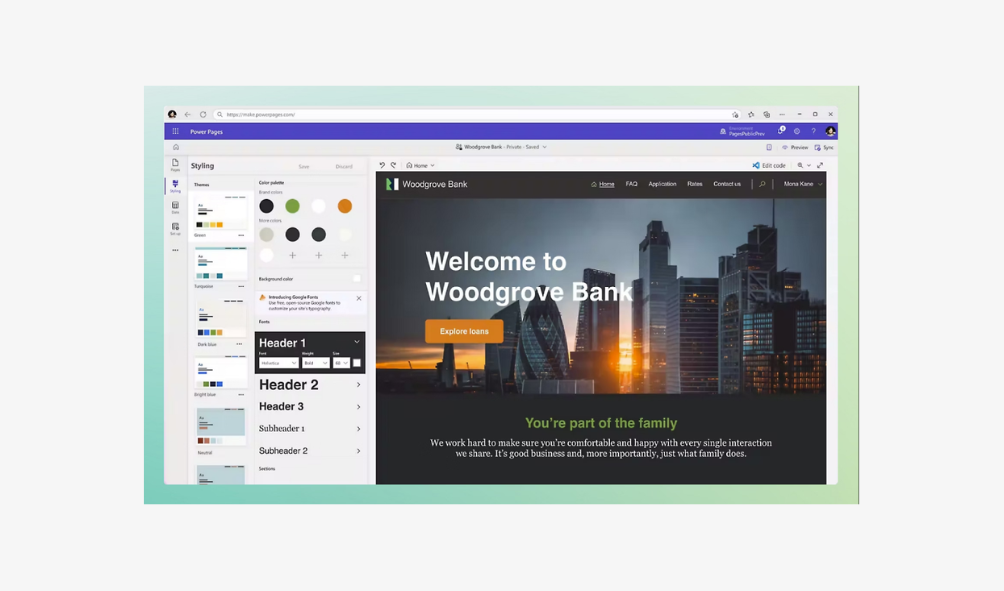
Self-service is now something customers and partners expect, not a nice extra. The way your organisation supports external stakeholders has a direct impact on efficiency, service quality and brand reputation. Traditional bespoke customer portals can be expensive to build, slow to deliver and difficult to maintain.
Microsoft Power Pages offers a practical alternative. As part of the Microsoft Power Platform, it gives organisations a low-code, enterprise-grade way to build secure, data-driven websites and portals for external users.
For organisations already using Microsoft technology, Power Pages can be a faster and more efficient route to improving client, supplier and partner interactions. As a Microsoft Power Pages Partner we wanted to share how you can build self-service customer portals with Power Pages.
The challenge with traditional self-service customer portals
Many organisations run into the same issues when they try to digitise customer or supplier-facing services:
- Siloed data: A custom portal built on a separate software stack often needs complex integrations to connect with back-office systems such as Dynamics 365 or internal databases. This can fragment data, create synchronisation issues and reduce visibility.
- Security and compliance overhead: Giving external users access to internal data requires careful security management. Identity providers, role-based access and compliance controls such as GDPR all need to be designed and maintained properly.
- High total cost of ownership: Bespoke software needs ongoing maintenance, security patching and framework updates. That can pull IT teams away from higher-value work.
Why Power Pages works well for customer portals
Power Pages helps solve these challenges by extending your Microsoft environment to external users without the cost and complexity of a fully bespoke portal.
- A unified back end with Microsoft Dataverse
Power Pages is built on Microsoft Dataverse, so your customer portal can read from and write to the same data platform that supports your operational, CRM or ERP systems.
When a customer updates their contact details, submits a support request or approves a document in the portal, those changes are reflected across your business tools. There is no need for manual rekeying or fragile integrations between separate systems.
- Enterprise-grade security built in
Security needs to be designed into any customer-facing system from the start. Power Pages benefits from Microsoft’s enterprise security architecture, including:
- Flexible authentication: Allow external users to authenticate using identity providers such as Microsoft Entra ID, Microsoft Entra External ID, Google and LinkedIn, with other authentication options available depending on your requirements.
- Granular role-based access control: Define exactly what external users can see or change, down to individual records and fields, using Dataverse table permissions and web roles.
- Compliance support: Use built-in safeguards to help protect against common web vulnerabilities and support accessibility and compliance requirements.
- Faster time to value
Low-code design tools, ready-made templates and integration with Power Automate mean common portal features, such as ticket logging, document upload, account history and service scheduling, can be designed and deployed in weeks rather than months. Pro-developer tools, including Visual Studio Code and JavaScript extensions, are still available when more bespoke functionality is needed.
Popular use cases for Power Pages customer portals
Power Pages can support a wide range of customer, partner and supplier portal requirements:
- Self-service support hubs: Let clients log support tickets, track resolution progress, access knowledge base content and communicate with support teams.
- Client onboarding and project dashboards: Collect structured documents, track compliance steps and give clients real-time visibility of project milestones.
- Supplier and partner extranets: Give external vendors a secure space to view orders, upload compliance documentation, submit invoices and manage shared workflows.
- Public sector and housing portals: Support citizen requests, permit applications, maintenance reporting and online submissions through accessible digital forms.
Starting your Power Pages Journey
Low-code tools make it easier to build portals, but lasting value still depends on good architecture, governance and user experience design. This is where we come in, Bridgeall is a leading Power Pages partner. We design and build customer portals with Power Pages following best practices and ensuring governance at every step. To explore your Customer Portal, visit our Power Pages implementation services.
As a trusted Microsoft Solutions Partner, Bridgeall brings deep experience across Microsoft Cloud, Power Platform and custom application development. We help organisations design, build and optimise Power Pages portals that deliver clear user journeys, strong security and measurable operational efficiency.
How we can help
- Discovery and architecture: Define user journeys, data structures and security roles that reflect your operational needs.
- Implementation and design: Build responsive, branded and compliant customer portals faster.
- Workflow automation: Connect your portal with Power Automate to automate notifications, approvals and back-office processes.
- Governance and support: Keep your portal infrastructure secure, scalable and manageable over the long term.
Ready to improve your customer experience?
Improving how you work with customers does not have to mean a complex, high-risk IT project. With our Power Pages Development services, you can launch secure, connected and easy-to-use customer portals quickly.