
Microsoft cloud services are central to how many organisations operate, from Microsoft 365 productivity tools to Azure infrastructure and cloud-based business applications. However, choosing the right licences, managing subscriptions and keeping costs under control can become increasingly complex as business requirements change. Microsoft offers a number of different ways businesses can buy licenses and Microsoft CSP is increasingly the best option.
Microsoft CSP licensing offers an alternative way for organisations to purchase and manage eligible Microsoft cloud subscriptions through a Microsoft Cloud Solution Provider (CSP) partner. In this article, we explain how Microsoft CSP licensing works, its key benefits, and what businesses should consider when choosing a licensing partner.
What is Microsoft CSP licensing?
Microsoft CSP licensing refers to purchasing eligible Microsoft products and cloud subscriptions through the Cloud Solution Provider (CSP) programme.
Rather than purchasing every subscription directly from Microsoft, organisations can work with an authorised CSP partner that helps them select suitable licences, manage subscriptions and access additional technical support and services. Depending on the products and services required, CSP licensing can cover solutions such as:
- Microsoft 365: Productivity, collaboration, email and business applications
- Microsoft Azure: Cloud infrastructure, computing, storage and other Azure services
- Dynamics 365: Business applications for areas such as sales, customer service and operations
- Microsoft security solutions: Eligible security products and services that help protect users, devices and organisational data
The precise products, subscription terms and support arrangements available will depend on the CSP partner and the relevant Microsoft offers. For organisations that want more than a transactional licensing relationship, CSP can provide an opportunity to combine Microsoft subscriptions with ongoing guidance and technical expertise.
How does Microsoft CSP licensing work?
Under the CSP model, an organisation establishes a relationship with a Microsoft partner to purchase eligible subscriptions. The partner can then help manage the licensing arrangements and provide agreed support services. The process typically involves four steps.
1. Assessing your licensing requirements
The first step is understanding how your organisation uses Microsoft technology and what it needs to achieve.
This might involve reviewing existing Microsoft 365 licences, identifying users who need additional functionality, assessing Azure consumption or determining whether current subscriptions align with your security and compliance requirements.
2. Selecting the right subscriptions
Based on this assessment, your licensing partner can recommend appropriate Microsoft subscriptions and licensing options.
This helps ensure that users have access to the tools they need without paying for unnecessary features or functionality.
3. Managing subscriptions and billing
Once subscriptions are in place, eligible CSP partners can help manage licence quantities, subscription changes and renewals.
Microsoft CSP subscriptions can have different terms, billing frequencies and cancellation conditions. Understanding these arrangements is important when planning budgets or anticipating changes in business requirements.
4. Providing ongoing support and optimisation
A CSP relationship can extend beyond purchasing licences. Depending on the agreement, your partner may also provide technical support, cloud consultancy, security advice and recommendations for improving your Microsoft environment. This can be particularly valuable as your organisation grows, adopts new services or changes its approach to cloud technology.
What are the benefits of Microsoft CSP licensing?
For many organisations, the value of Microsoft CSP licensing lies in the combination of subscription management and access to specialist expertise.
Reduced licensing costs
Working with a Microsoft Cloud Solution Provider (CSP) can help organisations reduce their Microsoft licensing costs. Depending on the products and agreements involved, CSP partners may offer discounts of around 10–15% against Microsoft’s recommended retail price (RRP), helping businesses get more value from their licensing budget.
Access to Microsoft expertise
Working with a Microsoft partner gives your organisation access to expertise that can help inform licensing decisions. A partner can explain the differences between subscription options, help assess your requirements and recommend solutions aligned with your business objectives.
Greater visibility of licensing costs
Reviewing subscriptions regularly can help organisations understand where their Microsoft licensing budget is being spent. This includes identifying unused licences, reviewing overlapping functionality and checking whether employees have the appropriate level of access.
While CSP does not automatically guarantee lower costs, a structured licensing review can help identify opportunities to improve value and avoid unnecessary expenditure.
Support as your business changes
Your licensing requirements may change as employees join or leave, departments adopt new tools or your organisation expands its use of cloud services. An ongoing relationship with a CSP partner can help you manage these changes and review your licensing arrangements as your needs evolve.
However, the flexibility to change subscriptions depends on the specific product, term and applicable Microsoft cancellation rules.
Licensing aligned with wider IT strategy
Microsoft licensing decisions can affect more than your IT budget. They can also influence security, productivity, data management and the capabilities available to your employees.
A partner with wider Microsoft expertise can help ensure licensing decisions support your broader technology strategy rather than being treated as an isolated purchasing exercise.
Microsoft CSP licensing vs buying directly from Microsoft
One of the most common questions businesses ask is whether they should purchase Microsoft subscriptions directly or through a CSP partner. Both approaches can provide access to Microsoft products. The main difference is the purchasing relationship and the additional services that may be available.
| Consideration | Direct purchase | CSP partner |
|---|---|---|
| Cost | Pay Microsoft’s applicable subscription price, subject to available offers and discounts. | May benefit from discounts of around 10–15% against Microsoft’s recommended retail price (RRP), depending on the licences and agreement. |
| Purchasing | Buy eligible subscriptions directly from Microsoft | Buy eligible subscriptions through a CSP partner |
| Licensing advice | Access Microsoft resources and available support | Receive advice from your partner, depending on the service agreement |
| Subscription management | Manage subscriptions through Microsoft’s administration tools | Access partner assistance with agreed subscription management |
| Technical support | Use the support options available under your Microsoft plans | May include additional partner support and technical services |
| Cloud consultancy | Arrange consultancy separately where required | Can be combined with licensing through the same partner |
The right option depends on your organisation’s size, internal IT capabilities and support requirements.
Businesses with established IT teams may prefer to manage many aspects of licensing themselves. Others may benefit from a partner that can combine licensing advice with managed IT, cloud consultancy or ongoing technical support. It is also worth noting that an existing Microsoft 365 customer can establish a CSP relationship without necessarily replacing every subscription already purchased directly from Microsoft. The transition should be assessed carefully to avoid unnecessary disruption or duplication.
What should you consider when choosing a Microsoft CSP licensing partner?
Choosing a CSP partner involves more than comparing subscription prices. The right partner should understand your organisation’s requirements and help you make informed decisions about your Microsoft environment. Consider the following factors when assessing your options.
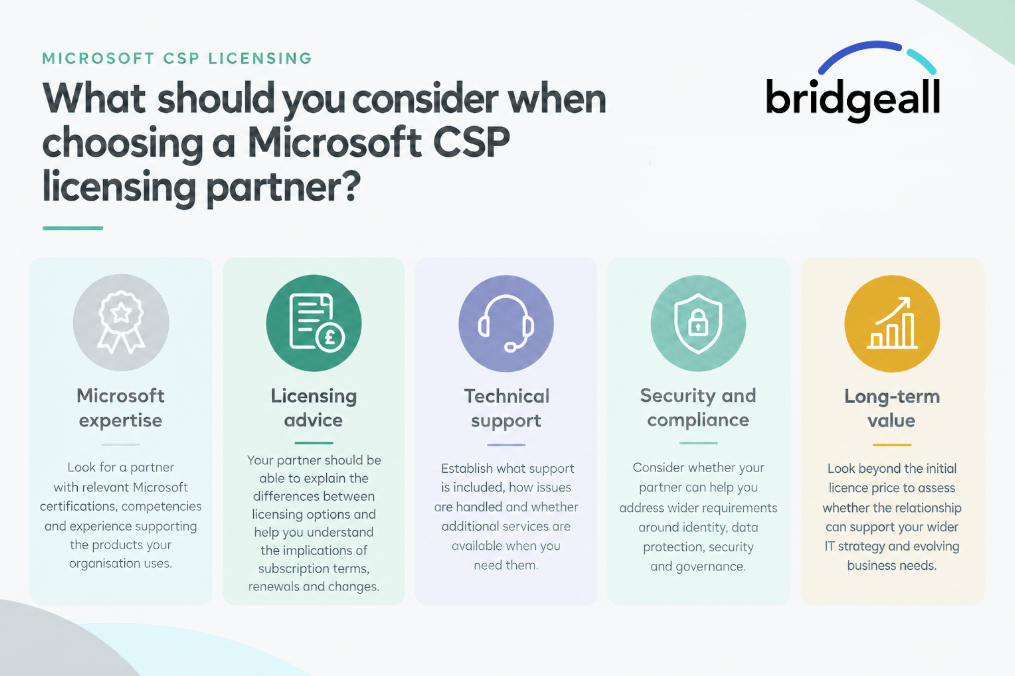
A partner that combines licensing expertise with technical consultancy can help you make better-informed decisions as your use of Microsoft technology develops.
How Bridgeall can help with Microsoft licensing
Bridgeall helps organisations across Scotland and the wider UK make effective use of Microsoft technology through expert Microsoft CSP licensing, consultancy and support.
As a Microsoft Solutions Partner and a Microsoft CSP licensing partner, we help organisations assess their licensing requirements, choose the right Microsoft subscriptions and manage their ongoing investment. Our team provides guidance on Microsoft licensing options, helping you align your subscriptions with your business needs and budget.
Whether you are reviewing your current Microsoft subscriptions, planning a cloud migration or looking to optimise licensing costs, Bridgeall can help you understand your options and make informed decisions about your Microsoft investment.
Speak to Bridgeall about Microsoft CSP licensing to explore how the right licensing strategy, Microsoft solutions and ongoing support can help your organisation work more effectively.